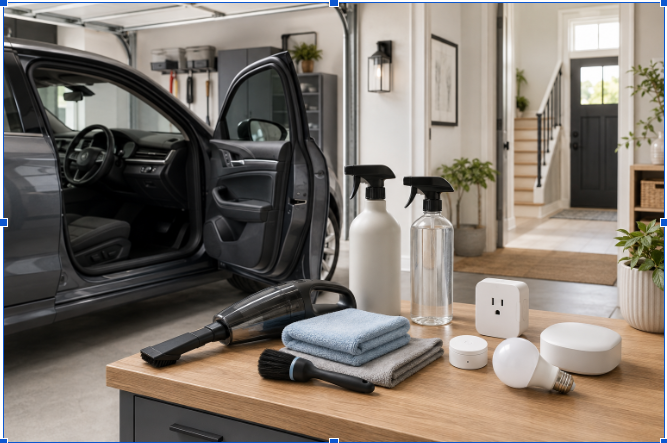
Creating More Organized Everyday Spaces
Cars and homes serve different purposes, but both can become easier to manage when products are selected according to real routines. Car interior cleaning products support the maintenance of seats, dashboards, carpets, glass, and other cabin surfaces. Home automation devices can provide scheduled or remote control for compatible lights, plugs, thermostats, locks, and household equipment.
Neither category should be purchased only because a product appears convenient in an advertisement. Cleaning products must be compatible with the materials inside the vehicle, while connected devices must work with the home’s network, electrical system, mobile devices, and preferred control platform.
Organization begins by identifying a specific need. A vehicle owner may need a product for fabric upholstery, leather surfaces, interior glass, or general dust removal. A homeowner may want to schedule a lamp, monitor a compatible sensor, or control selected equipment from one application.
Products should then be compared using their instructions, specifications, included components, and maintenance requirements. This process can prevent shoppers from buying several products that perform the same function or choosing an item that cannot be used with an existing surface or system.
A thoughtful approach focuses on compatibility and repeatable use. The goal is not to fill a car or home with accessories, but to create a manageable collection of products that serves a defined purpose.
Understanding Car Interior Cleaning Products
Car interior cleaning products are formulated for different surfaces and cleaning tasks. Common categories include upholstery cleaners, leather cleaners, dashboard products, carpet solutions, interior glass cleaners, wipes, brushes, microfiber cloths, and compact vacuum accessories.
A product designed for one surface may not be appropriate for another. Vehicle interiors can contain combinations of fabric, coated leather, synthetic materials, plastic, rubber, metal, wood-style trim, touchscreens, and tinted glass. The vehicle manual and cleaning-product label should be reviewed before applying any solution.
Testing a product on a small, less-visible area can help identify unwanted changes in color, texture, or finish. The test should be allowed to dry according to the instructions before the product is applied more widely. Spraying a cleaner directly onto screens, control panels, switches, or electrical openings should be avoided unless the manufacturer specifically permits that method.
Cleaning tools also matter. A soft microfiber cloth may suit many smooth surfaces, while a suitable brush may help address textured areas or carpet fibers. Abrasive tools can scratch delicate trim or displays.
Shoppers should check whether a product requires dilution, ventilation, protective gloves, rinsing, or a specific drying period. Labels should remain attached and readable so that instructions can be consulted during future use.
Building a Responsible Interior Cleaning Routine
A car-cleaning routine can begin by removing loose objects and disposing of trash. Floor mats can be taken out when appropriate, and loose dust or debris can be collected before liquid products are applied. This order prevents wet cleaner from mixing unnecessarily with surface dirt.
The vehicle should be parked securely in a suitable location. Doors or windows may need to remain open when a product label calls for ventilation. Children and pets should be kept away from active cleaning products and damp surfaces.
Different cleaning chemicals should not be mixed unless their manufacturers explicitly state that they are designed to be combined. Containers should not be transferred into unlabeled bottles because the original label contains usage and safety information.
After vacuuming, surfaces can be addressed according to their materials. Glass cleaner should not automatically be used on displays or coated surfaces. Upholstery products may require blotting rather than aggressive rubbing, and excess moisture should be avoided around seams, electronics, and seat controls.
Tools and cloths can be separated by purpose to reduce the transfer of residue between glass, upholstery, dashboards, and other surfaces. Reusable cloths should be washed and dried according to their care instructions.
Car interior cleaning products should be stored securely, away from excessive heat and direct sunlight, according to label directions. They should not be left where containers can roll around, leak, or interfere with pedals and vehicle controls.
Understanding Home Automation Devices
Home automation devices connect selected household functions to schedules, sensors, voice controls, mobile applications, or centralized platforms. Examples may include smart plugs, light bulbs, thermostats, cameras, door locks, motion sensors, and connected switches.
Compatibility is the central consideration. A product may require a particular wireless network, mobile operating system, hub, application, or smart-home platform. Some devices connect directly to a home network, while others require an additional bridge or controller. The product listing should clearly identify these requirements.
Installation difficulty can also vary. A smart bulb may be installed in a compatible fixture, while a thermostat, wired switch, or door lock can involve electrical wiring, heating and cooling systems, or physical modifications. Shoppers should determine whether professional installation is appropriate before ordering.
Power requirements should be confirmed. Battery-operated sensors need periodic battery replacement, while plugged-in devices require an accessible outlet. Wired equipment must match the home’s electrical arrangement and installation requirements.
Home automation devices should support a clear routine rather than adding unnecessary complexity. A smart plug might schedule a compatible lamp, while a sensor could provide a notification when a stated condition occurs. The product’s capabilities and limitations should be reviewed carefully because similar-looking devices can support different functions.
Privacy, Security, and System Maintenance
Connected products require ongoing attention after installation. Home automation devices may collect account details, usage information, video, audio, location data, or device-status records depending on their features. Shoppers should review the manufacturer’s privacy policy and account requirements before connecting a product.
Strong, unique passwords should be used for device accounts, and available account-security options should be enabled. The home router, mobile applications, and connected devices should receive applicable software or firmware updates. Support periods and update policies may vary by manufacturer.
Cameras, microphones, and smart locks require particular consideration because they can affect privacy and physical access. Users should understand where information is stored, who can access it, and how permissions can be removed. Household members and visitors should be informed when recording devices are present where required by applicable laws or policies.
Routine maintenance may include replacing batteries, checking sensors, testing automations, reviewing shared access, and removing devices that are no longer used. A device should also be removed from associated accounts and reset according to manufacturer instructions before it is sold, donated, or discarded.
Automation should not replace basic safety practices. A connected lock, plug, camera, or sensor may provide useful controls, but users should still follow the safety instructions for the appliance, door, electrical system, or household activity involved.
Creating a Practical Shopping Checklist
For car interior cleaning products, begin by listing the surfaces that require attention. Check the vehicle manual, product label, intended materials, usage instructions, safety requirements, container size, included tools, and storage conditions. Avoid assuming that a general cleaner is suitable for every surface.
For home automation devices, record the available network type, phone operating system, preferred platform, electrical requirements, existing hub, and intended automation. Confirm whether subscriptions, cloud storage, replacement batteries, or separate accessories are required.
Total cost should include more than the initial product price. A cleaning product may require brushes, cloths, or repeated replacement. A smart device may require a hub, professional installation, subscription plan, or compatible equipment. These costs should be identified before purchase when the information is available.
Warranty coverage, return conditions, shipping terms, and customer-support options should also be reviewed. Keep packaging and order records until each product has been inspected and tested within the retailer’s permitted return period.
Car interior cleaning products and home automation devices can support organized routines when each item has a defined function. Careful comparison helps shoppers select products that match existing materials, systems, and habits. Compatibility, safe use, maintenance, privacy, and long-term costs should remain part of the decision from the beginning.